
Singapore
Breadcrumb navigation

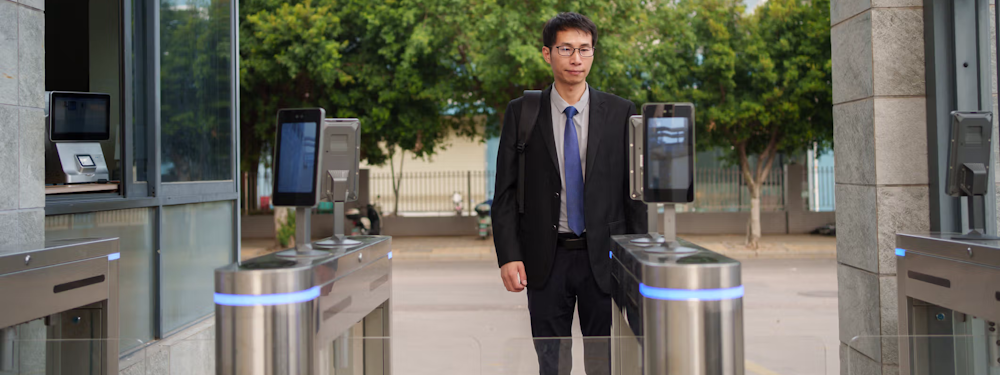
Technology’s Role in Reshaping Building Management
Most facilities in Asia Pacific are still being managed with security models designed for a pre-digital era, a gap that is increasingly becoming a risk.
That’s true of everything, from infrastructure and government buildings to data centres and offices.
This is especially evident in commercial buildings. From Grade A office towers in Singapore and Tokyo to mixed-use developments in Sydney and Jakarta, building owners and operators have begun rethinking how their properties are secured, managed, and experienced. At the heart of this shift is a move toward identity-centric access, data-driven operations, and integrated digital platforms.
For forward-looking operators, access control is no longer just a security layer. It is now a foundational infrastructure: a source of intelligence, efficiency, and competitive differentiation.
The rise of identity-centric access
Traditional access control has long relied on two primary methods: 1) what a user knows (ie a password or PIN), and 2) what a user has (a card or token), rather than who a user is.
However, the first two categories leave building operators vulnerable. Passwords can be shared or hacked, and physical tokens are always at risk of being misplaced, or worse, cloned. In high-density buildings serving thousands of occupants and visitors daily, these risks are amplified.
This has accelerated the adoption of biometric authentication - verifying who the user is through facial recognition, fingerprint, iris or other identifiers. In Asia Pacific, where the smart city market was estimated at US$223 billion in 2023, biometric technologies are gaining rapid traction in commercial and public-sector buildings alike.

Head of Innovation and Technology, Public Safety Business Unit, NEC Asia Pacific.
Convenience is a key driver, explains May Chua, Head of Innovation and Technology, Public Safety Business Unit, NEC Asia Pacific. “From a user perspective, there is no need to carry cards or remember PIN codes.” But for operators, the benefits run deeper.
Increasingly, identity is not just an access credential, but a foundational layer for how buildings operate. Once a verified digital identity is established, it can be integrated across multiple building systems, from access control and lift controllers, to shared facilities, parking and visitor management.
For example, the same identity used to enter a building can automatically determine which floors a user is permitted to access via the lift system, restrict entry to sensitive zones, or enable seamless use of on site amenities. This allows operators to enforce policies consistently, reduce manual configuration, and deliver a more intuitive experience for occupants and visitors.
“From a security standpoint, biometrics are inherently more difficult to compromise. PINs can be shared and cards can be lost or passed to unauthorised users. Biometric credentials are tied to the individual, significantly reducing impersonation risks and strengthening auditability.”
Operationally, biometric systems can also streamline investigations. In the event of a security incident, officers do not need to determine whether a card was stolen or misused; identity-linked logs provide greater certainty and faster forensic clarity.
There is also a sustainability dimension. Eliminating physical cards reduces procurement, printing and waste - aligning with ESG priorities that are important to many institutional investors and tenants.
Over time, operating costs decline and total cost of ownership improves. This shift from short-term capex thinking to long-term value creation is already reshaping investment decisions across the region.
Facial recognition and beyond
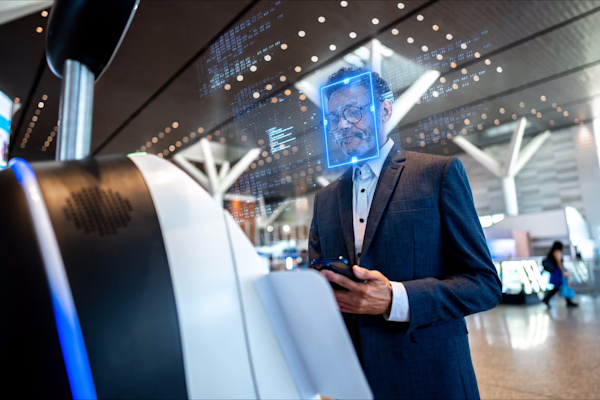
Within biometrics, facial recognition has become the dominant technology. The COVID-19 pandemic accelerated the demand for contactless authentication, pushing organisations to replace fingerprint systems with touch-free alternatives.
Now that facial recognition serves as a digital identity layer, technology has gone one step further. Touchpoints are translated into datapoints, allowing valuable analytics to be compiled, analysed, and derived.
Looking ahead, iris recognition is gaining ground in specialised environments such as laboratories and clean rooms, and even at national level for NEC’s passport-less travel initiatives. Palm and contactless hand authentication are also evolving, with hover-based technologies reducing friction while maintaining hygiene.
In parallel, mobile authentication is emerging as a complementary channel, allowing smartphones to function as secure credentials. For building operators, the strategic question is no longer which biometric to deploy, but how to govern identity across multiple modalities without fragmenting trust.
From security system to data platform
One of the most significant trends in Asia Pacific is the integration of access systems with broader building management and workplace platforms.
Historically, operators treated systems in silos: security as security, and facilities as facilities. However, forward-looking building operators now view access control as infrastructure, a digital backbone that connects security, operations, safety, and tenant experience.
At a basic level, access systems generate entry and exit data points with timestamps. These can be analysed to understand usage patterns, track peak flows, and optimise staffing.
For example, if data shows that one entrance is consistently underused, operators can reconfigure wayfinding or redistribute resources. If traffic flow shifts during certain hours, lift frequencies can be adjusted to reduce wait times and improve energy efficiency. Attendance-linked biometrics can also support workforce management in appropriate contexts.
When facial recognition is integrated with CCTV and other building management systems, additional insights emerge. Correlating identity data with surveillance footage can enhance incident response and investigation.
The technical enabler for this integration is the use of APIs. Through open, secure interfaces, access systems can feed data into analytics dashboards, safety platforms and tenant apps, transforming isolated events into actionable intelligence.
NEC’s role in the evolving landscape

As a pioneer in biometric innovation, NEC has played a leading role in advancing identity technologies from national-scale deployments to enterprise environments.
Beyond biometrics, NEC’s AGIS access control system is designed as a robust, extensible platform. Rather than operating as a closed system, it enables the onboarding of third-party technologies, supporting the integration demanded by today’s smart buildings.
This platform approach aligns with a broader market shift. Increasingly, organisations are moving from traditional on-premises models toward Access Control as a Service (ACaaS), favouring operational expenditure over capital expenditure. Cloud-enabled architectures offer scalability, remote management and faster updates: essential in a dynamic threat landscape.
Balancing security and privacy
As biometric adoption grows, so too does scrutiny around data protection and surveillance. Across Asia Pacific, regulatory frameworks are shaping how personal data is collected, stored and processed. “Operators must balance privacy with security, and that’s a challenge that’s both technical and ethical,” says Chua.
Security by design must become a guiding principle. This means embedding safeguards from the outset, aligned with customer requirements and local regulations. Advanced solutions can mask the faces of the public and only identify individuals on a watchlist, enhancing safety without indiscriminate surveillance.
In a region where public awareness of privacy is rising, trust is emerging as the true differentiator. Building owners must be transparent about how data is used, ensure robust cybersecurity controls, and partner with technology providers that demonstrate global standards and accountability.
Creating What’s Ahead
The trajectory is clear: identity is becoming the new perimeter. As hybrid work reshapes occupancy patterns and smart city initiatives expand, buildings must become more adaptive, secure, and data-driven.
In the future, access control will be recognised as strategic infrastructure that supports safer environments, smarter space utilisation, and superior tenant experiences.
For building owners and operators across the region, the imperative is to move beyond incremental upgrades. The opportunity lies in reimagining access as an intelligent, integrated and trusted platform - one that turns every authorised entry into insight, every touchpoint into data, and every building into a responsive, future-ready asset.
With the right technology partner and a clear governance framework, identity-centric systems can unlock not only stronger security, but also operational excellence and long-term value. Chua adds, “At NEC, we are creating what’s ahead in trusted identity, enabling safer and smarter experiences wherever people live, work, and travel.”